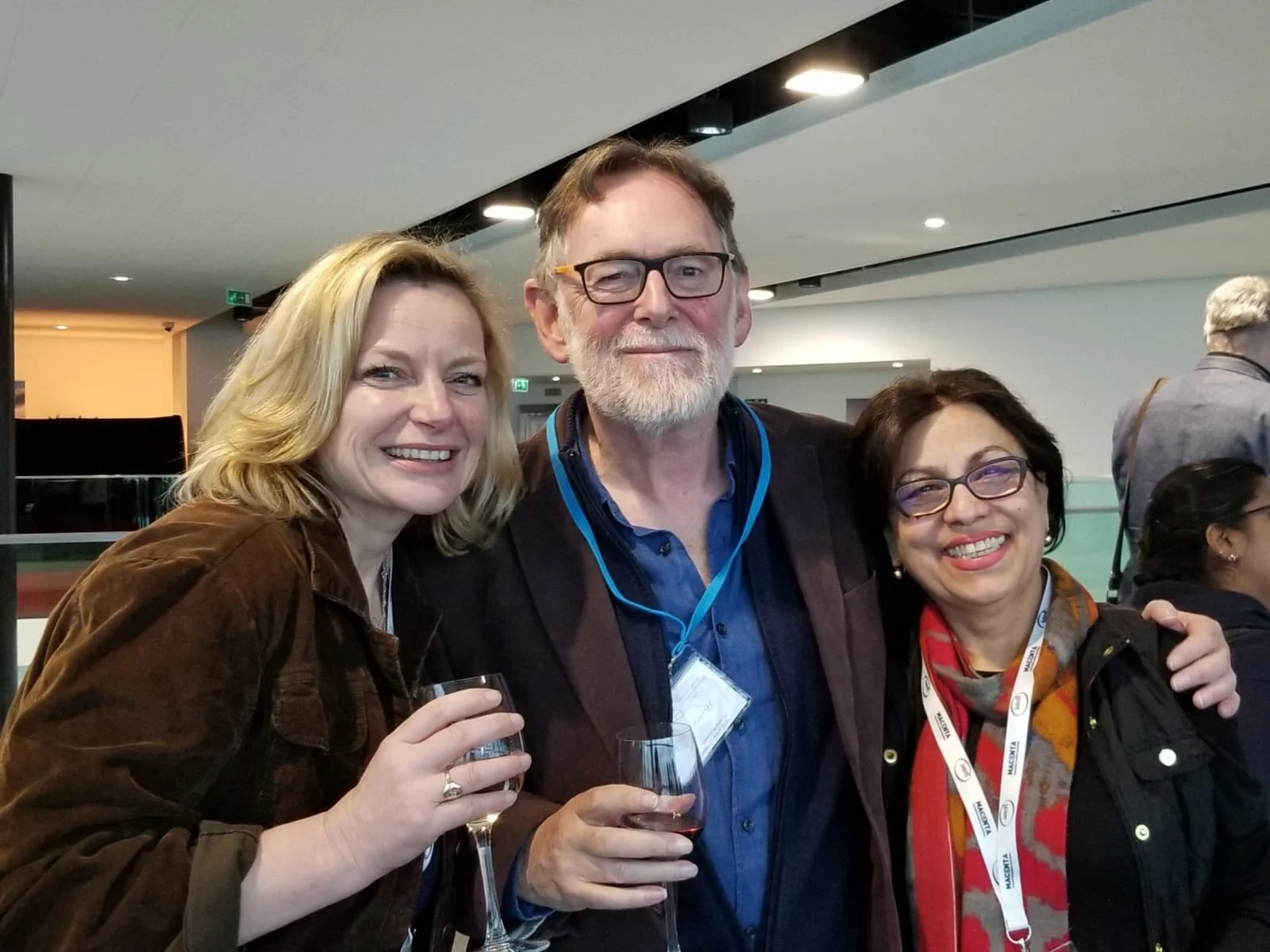
In this episode, I talk to Lesley Painter-Farrell about peer observation. We discuss why watching another teacher can be one of the best ways to learn, especially when you go in with a clear focus. Lesley talks about how to prepare before an observation, what kind of notes to take, and how to make the conversation afterwards useful rather than awkward. We also discuss how peer observation can help both teachers learn, regardless of who has more experience.
Ross: Welcome back to the TEFL Training Institute podcast everyone. I'm Ross Thorburn and this week my guest is Lesley Painter-Farrell. Lesley is director of the MA TESOL program at the New School in New York. She's worked as a teacher of English in Portugal, Poland and many countries in Asia. She's a former CELTA trainer. But in this episode Lesley and I are going to talk about peer observation.
We'll talk about why peer observation is one of the best ways for teachers to learn. We'll talk about the preparation necessary before an observation to make that useful and we'll also talk about the discussion after the class and how to make sure that regardless who is observing whom, that that can be a discussion that helps both people learn. Enjoy the episode!
Hi Lesley, thank you for joining me today. To begin with I wanted to ask you about why you think peer observation is so useful. You've said that observation is arguably the richest and most powerful tool for teacher development. Why is that?
Lesley: I think because observation is, it's a privilege. You are able to just sit on the bylines and look at what's going on. You're not involved, you don't have to teach, so you've got a real vantage point of seeing students reactions, the whiteboard, everything and really it should be with the lesson plan in front of you as well. So it's a really privileged position and it's a great one.
I think what it does is it puts you, okay that's how people do it. I was thinking about that, you know there's a difference between reading all these wonderful books by Jeremy Harmer and all of us but then you've got to really see it in 3D because the thing that I always tell my teacher and I still have problems with this was I remember being told in my CELTA which was the RSA certificate then about gist, gist, got to set a gist question but it never dawned, I couldn't get it really. I couldn't grasp really what gist was.
I know it's very obvious now so maybe that's saying something about me but I really didn't know and I didn't know how to do it and I never observed anybody doing it on my RSA cert so constantly I constantly had feedback on, yeah but your gist question was a little bit rocky and I'm thinking I didn't even know I asked a gist question but if you think I did then that's great. Then about six months later I got the opportunity of observing a teacher who taught for I think 30 odd years and she asked me what do you want to observe and I was like gist please went and she said okay I'll do this. She wasn't even going to do reading or listening so went in and she'd gone through the lesson and then she suddenly looked at me as if to say pay attention now and she asked this question and suddenly it went to like the light bulbs went on and I was like oh it's not so complicated.
I thought it was a really complicated question. That's what I needed. I needed the absolute practical so putting it into 3D I think is really really important and I think it grounds teachers because sometimes when you actually see a teacher do something then it's okay that grounds it. When you read about it it's much harder.
Ross: I love that story about going and looking at gist questions and I think a lot of teachers might assume that observations mean taking a blank sheet of paper into a room and taking notes or even ticking boxes on a you know what did the teacher do well type rubric but of course it can also be about picking a focus before the lesson and then collecting data on that one area in the lesson.
Lesley: I think observation is instructional as well as it can be okay I don't want to be like that that's not how I'm going to teach or that is exactly how I'm going to teach so it's the good the bad and the ugly and I think you never walk away from an observation without a really positive experience even if you think and it's obviously your perspective you think you've seen the worst lesson but you walk away with new knowledge so I just always that's why I think it's absolutely essential.
I remember working with Ruth Wajnryb she wrote the book Observation Tasks well that got me to thinking about observation is as a directed experience not just okay let me walk into a classroom and let me just observe but let's do what I just said let's realize okay this is something that I struggle with I can't do I don't know how to do gist or I don't know how to stop talking as much or I don't know how to give great instructions then go in and tell the teacher you know have a conversation with a teacher and say can I come into your class because I know you're good at this or I just want to see this I just want to experience how you do it go and observe take notes on that specific thing and then of course work on it later but I think observation gives you a multitude of ways to learn which are fun and easy and collaborative and collegial so all the right reasons. Now we already touched on this but I think when teachers hear the word observation they think of being in a classroom watching a class but a lot of the work in a successful observation happens beforehand what can teachers do before an observation to make it more successful? Yeah have a conversation with the teacher prior to observing them so you know talk to them and say this is what I'm working on is there something you'd like me to observe so really making it collaborative because I know that with peer observation what you don't want to do is make it a stressful situation what you do want to do is make it something that's mutually helpful so that's important to me in having the pre-conversation and then post and the post conversation won't be oh this is what I saw no this is you know this is what I learned change the way you talk about your feedback it's not oh I observed you do this oh I learned how you did that and that will be a much better sort of experience for both of you so that it doesn't feel like it's an assessment.
Ross: Tell us more about that and so what are your top tips for having that discussion after an observation because although as our examples earlier showed that you can learn a lot from observing someone obviously both teachers can learn from that discussion afterwards.
I think it's got to be handled well so I think you've got to really think about how do you engage in that conversation with the teacher that's observed obviously they're going to go first right because it was your privilege to be in there they let you in the classroom so you need to listen to them first about okay what did they like what didn't they like what did they see what were they thinking about or is it the direction so is it you know if they said oh I'm working on pronunciation work let them talk about that first and be very specific so that we're not talking about this whole lesson which had good bits and had bad bits you know I always say to my teachers every single lesson has a moment that's not the best then I think it's the words the language that you use so if you do start out with well I observed this what do you think about that that's kind of accusatorial in a way rather than oh I learned from this maybe could you help me understand how did it work why did it work that way so for example if it is pronunciation work that's what I wanted to see and I saw the teacher engage with say quiz and air rods or whatever that's what I want to do I said well I you know I really learned that you you just have to use fewer Cuisenaire rods than more so tell me why did you come to that how did you get to that process which then maybe it allows you to sandwich because then maybe there is that thing that you didn't quite like or you didn't quite think of as productive but maybe it's the same conversation so building on that thanks for talking to me about pronunciation work I've really that's what I'm going to try now and maybe you can come to my classroom and see it but then I did notice that this happened so maybe could you explain how you got to that so it's the same conversation but maybe with something you didn't really appreciate and then offer some advice if you think you know yeah that was interesting I saw you do it with the quiz and errors but then it seemed to be a little bit different here so the language is everything and the actual sequence so the positive we know always first and then thinking about more open-ended questions I don't also think that any observer should go in thinking and that they have the answers because we don't we have suggestions so obviously that's key and how you say that you know maybe we can think about this or I'll try this now having seen you do this maybe I'm going to think about x y and z it's always difficult I mean any kind of observation can get difficult right and it can get really difficult really quickly if it's not handled well and appropriately it's interesting you said that I always thought that idea of giving feedback to the person really depends on the relationship between the person observing and the person being observed so for example if I was an experienced teacher and I'm observing a new teacher I would ask them at least if they wanted some tips or advice after the class but if a teacher with no experience observed me I'm not sure how useful it would be for them to give me advice afterwards I mean with your example earlier of observing that teacher with 30 years’ experience when you were the new teacher I mean did you give them advice after class actually with her she asked me to look at something so let's go back to the idea of evidence so you might have this teacher that's taught for 30 odd years they're absolutely brilliant in their class you know that there's nothing they're not they're confident everything but as I said we're constantly moving we're constantly having different students and maybe we're worried they've got routinized who knows so let's not think about opinion-based feedback let's think about evidence-based feedback for example maybe the teacher did talk too much who knows maybe there was something that was like they were a bit preachy teachy that we didn't appreciate in which case just write down as much as you can at the teach stage in their lesson rather than saying maybe you taught a little bit too much instead say oh you know when you went over the present perfect you know when you clarified whatever count non-count whatever this is what you said what should we have a look at this and then get that person to look at it and give you feedback so you're not as I said giving them your opinion but it's difficult with a teacher that's had experience and it might also be difficult with any other teacher but when you say okay this is what I thought this is when I think you know then recording lessons becomes important and so you're having a negotiated conversation as opposed to let me give you feedback because that to me automatically seems to think that you're just going to do some kind of data dump.
Ross: Yeah that's interesting I had a similar experience where some of the best feedback I've ever had actually on a class was from a teacher with no experience who was observing me using a task from Ruth Weinribs classroom observation tasks book and this teacher used one of the tasks that was about classroom interactions and she was collecting data on which students spoke in class and obviously which ones didn't and after the class she told me the students that you asked the most questions to are the students who were sitting in the middle of the room and that was really really useful feedback and it's something that I'm always aware of now to try and ask questions sort of equally around the room so I think that goes to show how even a novice teacher coming to observe an experienced colleague can still help the more experienced colleague learn and for me that's the reason why I think observation is such a great tool for teacher development it's because both people in both roles the observer and the observer can learn directly from the process.
Lesley: That's why I think it's so important to see it as a collaboration and also I think we've got to be aware of what are the frames of this observation if we just say okay walk into my class sit down stay for the whole time well typically student you know observers don't need to stay for the whole time and typically they do need to be told or asked what to look for because less is more you know you're not going to go into a class and then observe it and try and pick up every single thing then we also have to make these things actionable which means if we give ourselves a task that's too big we won't do it.
Finally I recently spoke to some managers who said that their teachers were not interested in observing their peers because they just wanted to learn new activities so what would you say to those teachers to encourage them to take part in peer observation? Well I think if we make it much more defined much more concrete right go into that class 15 minutes look at the you know how many referential questions were asked write them down come back out again let's think about the use of referential questions in terms of you know learning or whatever or student engagement it has to be very very concrete not negating the fact that teachers want to look at tons and tons of activities we all do if that's what helps them then that's great so think of that one activity come back and tell me or tell your peers but at the same time let's do this. Now we did an interesting thing at NYU where we made people go to conferences and go to different talks but come back with one idea and then we all got together and we shared these one ideas. Now it was interesting to me because everybody had of course 5, 10, 15, 20 ideas but they then have to sift through the one that they wanted to present and so ultimately we ended up with some really very good ideas.
I think the same of observation I think think about maybe the one thing that you want to bring back to all of us to share to think about because we enjoy it and they have to sift through things and that as a task is is very useful so there's also a certain type of accountability there because what I'm saying is don't leave observation between the two teachers bring it further and in the next meeting you talk about it.
Ross: One more time everyone that was Lesley Pinchett-Farrell. For more from her click on the link in the show notes. For more from us go to our website www.tafeltraininginstitute.com and if you'd like to support the show you can click on the link in the show notes to buy us a coffee or just tell a friend about the show. Thanks again for listening we'll see you again next week goodbye.