

Teacher trainer and author Tessa Woodward joins me to talk about experiential learning in teacher training. What is experiential learning? Where does it come from? What is loop input and how can this help teachers? How can teachers make sense of what happens to them in training?

In this episode, I talk to Lesley Painter-Farrell about peer observation. We discuss why watching another teacher can be one of the best ways to learn, especially when you go in with a clear focus. Lesley talks about how to prepare before an observation, what kind of notes to take, and how to make the conversation afterwards useful rather than awkward. We also discuss how peer observation can help both teachers learn, regardless of who has more experience.

Author of Learning about Assessment, Professor Kathleen Bailey joins us to talk about testing. Professor Bailey tells us about why assessment exists, the effects it can have (both positive and negative) on teaching and learning, how we should design tests and how we should grade our learners.

Mario Rinvolucri, author of “Once Upon a Time: Using stories in the language classroom” talk to us about storytelling, one of the “most compelling and ancient of human activities”. How can stories give students meaningful, comprehensible and motivating input? Listen to find out.

Second language acquisition researcher, Patsy Lightbown, joins us to discuss how languages are learned, and also, how they aren’t. We hear about problems of training teachers, how learners overcome challenges and aspects of language teaching which still lag years behind research.

If you regularly listen to this podcast, the chances are you listen because you want to be a better teacher. But what is the best way to become a better teacher? Is it attending training? Is it being observed by your boss? Is it watching your peers teach? In a special end of year double length episode, Professor Thomas Guskey, author of Evaluating Professional Development talks to us about the best way to help teachers learn and the evidence for workshops, peer observations and what the best teachers do that the rest of us don’t.

Students need to speak to learn a language and the more students talk, the more they learn. Not according to Professor Stephen Krashen. For 40 years he has championed the concept that what students should be doing in class is reading (and listening), not speaking. In this episode, Stephen tells Ross some of the arguments against forcing students to speak, something which might not just be inefficient, but in some cases counterproductive.

In this episode, I had the privilege of speaking with Professor Lesley Painter Farrell about how we can help students retain more language lessons for the long haul. During the podcast, Lesley outlines the difference between short-term learning and long-term memory. We discuss evidence-based techniques teachers can implement to optimize retention. Lesley also shares some simple but effective techniques such as recycling content across lessons, building in reflection time, avoiding cognitive overload, and using retrieval practices. Listen now to uncover how we can help our students remember more.

Professor Kathi Bailey joins us to discuss teacher evaluation. Teacher evaluation can do so much good, but it can also end up doing even more harm. Professor Bailey tells us about what supervisors can do to earn trust, why supervision and evaluation is important, and how everyone can make the most out of the process.

Young learner expert, Annamaria Pinter joins me to talk about getting young learners to communicate with each other.

TEFL guru Jeremy Harmer joins me to discuss deliberate learning. How important is input? Can students “pick up” language in the classroom with “study”? What is the role of grammar? And what does Jeremy think about Stephen Krashen’s ideas about language acquisition?

I speak with Amol Padwad from Ambedkar University Delhi about teacher motivation and teacher development. What incentives make sense for teachers at different stages of their career? What demotivates teachers from wanting to develop? And how can schools encourage all their teachers to develop without forcing them?


Professor Anne Burns joins me to talk about how teachers can go about action research with their own classes.

Gail Ellis, author of Teaching Children How to Learn, joins me to discuss learning to learn. Gail tells us the importance of encouraging metacognition, how to make learners more aware of the aims of activities, and how to encourage meaningful reflection.
Texts are a starting point for many lessons. But what about using a text with no words? Mark Hancock (author of Pronunciation Games, English Pronunciation in Use, Pron Pack and Pen Pictures) tells us about basing lessons around pictures and using these to generate stories, descriptions, language needs and much more.

Professor Brian Tomlinson from University of Anaheim wrote his first coursebook with Rod Ellis in the 1960’s and has been involved in materials design since. We ask him: how do you write a great coursebook?

How is grammar similar to lexis? What mistakes do we make when we teach grammar? And how can we include enough grammar to keep grammar obsessed students satisfied? We speak with Hugh Dellar to find out.

Professor Thomas Farrell joins me to discuss MA TESOL courses: what are their shortcomings and how could these be improved? We discuss what is covered in MA courses, how they are taught, whether MA TESOLs ought to include a practicum, and much more.

Professor Michael McCarthy joins me to talk about what vocabulary we should teach and how to teach it. Mike tells us about the most common words in English and what non-common words we should teach our students, what aspects of vocabulary we should teach at different levels and how to stop students from forgetting the vocabulary they’ve already learned.

Jonathan Newton joins me to talk about running group work successfully. We discuss the skills teachers need to make group work effective, common problems in group work activities and what to do after group work to maximize learning.

All language students speak a first language, but what do we do with it? Some teachers ban it. Some teachers use it to teach English in. Some schools make students sign a pledge never to use it. Penny Ur tells us about what we can do take advantage of students first language, when to avoid it and when even to encourage it.

Paul Nation tells us about the importance of fluency and how to develop it with students at all levels. Paul Nation is one of the world’s leading researchers on and writers on vocabulary, reading and fluency, has written dozens of books and been publishing research on these topics since 1970.

Professor David Carless from the University of Hong Kong joins me to talk about feedback. David tells us why our students should spend more time reading and acting on feedback than teachers spend writing it, how we can use examples from outstanding students to help students give feedback to themselves and how much should the content of feedback be based on teachers’ ideas as opposed to students.

On this week's podcast, Lesley Painter-Farrell joins me to talk about reflection. We discuss why reflection is so important, different ways teachers can reflect and the best question you can ask yourself after teaching a lesson.

I speak with Rhonda Oliver, SLA expert with young learners about tasks and interactions with young learners. Does speaking with other students help students learn language? How can teachers design tasks which students will find interesting? And which students should teachers pair their students with to get the most out of group work tasks?

How can we help students improve their listening and reading? Traditionally, teachers teach skills like predicting, skimming, scanning and guessing from context. In this episode, Michael Swan presents reasons why we should avoid this approach, the reasons students find comprehension difficult and what alternative approach teachers should take to improving listening and reading skills.

Many teachers dread being observed by their supervisors. On this week's podcast, Mario Rinvolucri tells us about an alternative: supervision without observation.

Regular guest Matt Courtois and I discuss staging lessons with young learners. What is staging? How much should teachers deviate from their plans? How can we avoid running out of time in our lessons?

Regular guest, Matt Courtois joins me to talk about how teachers can encourage young learners to be creative. We discuss what creativity is, why it is challenging at low level and share some of our favorite creative activities.
Pete Jones talks to us about the IELTS speaking test. We discuss how fair the different criteria are, what are some common misunderstandings about the criteria and how teachers can help students improve their IELTS speaking scores.

Regular guest Matt Courtois and I discuss what makes quality teacher talk. How should young learner teachers give instructions? How much should teachers grade their language? And when should teachers say nothing at all?

Jake Whiddon and I discuss the two most common questions we get from young learner teachers: “How can I get my students to behave?” and “How can I get my students to pay attention?”

Letterland teacher trainer Lesley White tells Ross about phonics. We touch on the history, the advantages of phonics over other approaches, different options to teachers within the phonics system and some of the differences between learning to read in your first language and in your second language.

Jake Whiddon joins me to talk about using storybooks in class. So many schools have graded readers, but so few teachers use these in class. Graded readers can be used with students of any age group and any level. They’re a great alternative to the coursebook and a contextualized way of presenting new language. In this episode, you’ll hear a simple five step approach that you can use to use graded readers with your students.

Dave Weller joins me to discuss making the best use of interaction patterns. We look at how shifting interaction patterns can create room for creativity, which students to pair with which and how many students should we put in a group.

It’s easy to get students talking, but how can teachers encourage students to communicate?

Teacher trainers Allan Crocker and Diederik Van Gorp join me to tlak about engaging very young learners. How can we encourage active learning with learners who have the shortest attetnion spans?

Author and positive discipline trainer, Dina Esmer, joins me to talk about tools for managing young learners’ behavior. What can teachers do to encourage long term positive behavior in class? How can teachers train learners to solve their own behavior problems? And what can teachers do when conflicts happen in their classes?

We know that the majority of the world's English speakers are not native speakers, so what does this mean for how we teach English? Marek Kiczkowiak talks to us about teaching English as a lingua franca (ELF). Is ELF a variety of English? How can teachers approach teaching it? In what situations is it helpful to students (and when might it not be)?

We speak with one of our favorite guests, __________ about _____________. An antidote to free talk activities, _____________ are a great way to get students to _______, listen to each other and ___________. ___________ activities can even be used in teacher training. Listen to fill in the _______.

Which students do we choose to speak in class? Trinity CertTESOL trainers Allan Crocker and Rebecca Gary join me to discuss how we pick students to speak, how to stop students from speaking too much, how to know who is ready to speak before anyone opens their mouths and what to do when no one wants to talk.

How should teachers familiarize themselves with the assessments they need to prepare their students for? Which test strategies should teachers teach? What effect do students’ expectations of test-prep have on teaching? Pete Jones tells us about approaches towards helping students prepare for language tests.

Young learner and teens expert Chris Roland talks to us about giving differentiated support to students. We discuss which students we are trying to help when we differentiate, which students teachers tend to forget about when they plan and how to differentiate without needing to spend twice as long preparing materials as usual.

Many coursebooks and teaching materials are made for a global market. How can you make a course book written for students all over the world relevant to your class? We'll look at how to adapt ESL teaching materials and when it might be better to just stick with the book.

Why do students make errors? Are errors bad? Should we even bother correcting them? We answer all these questions and more…

Regular guest Matt Courtois returns to discuss teaching groups of young learners online. We focus on some of the advantages of online teaching – what is it possible to do online, that isn’t possible to do offline? How to get students to genuinely and meaningfully communicate with each other online? And why tech problems and glitches might actually be the best part of online language lessons.

Lots gets said about the value of graded readers, but how can teachers use these in class? We speak with Diploma in TESOL course director Anne Carmichael about using graded readers with students at different levels, how teachers can integrate different skills using graded readers and how teachers can deal with new language from the texts.

We discuss useful what makes a language learning game effective, how to move offline games online and differences between language learning games for young learners and adults.

Do lessons have a plot? Should classes have a storyline? How do lesson plans resemble movie scripts? We speak with teacher trainer extraordinaire Diederik Van Gorp, about story arcs in lessons and how these affect our transitions from one activity to the next.

We discuss what we can apply to the language classroom from Daniel Willingham’s book “Why Don't Students Like School?”, with friend of the podcast (and Daniel Willingham fan), Dave Weller.

Excited students, lots of talking, creative craft activities equals a successful lesson, right? Maybe not. We speak with Dave Weller about how to design tasks that result in language learning.

Timing causes so many problems for teachers – activities which run on too long, running out of time at the end of a lesson, not finding time to plan or reflect – but we rarely discuss time and how to deal with it. In this episode Ross and Trinity CertTESOL course director Allan Crocker discuss the issues related to time; how time influences how we teach, the problems it causes and how we can spend it better.

We spend a lot of our time asking questions, either to our students, our trainees or ourselves. What makes an effective question? We discuss different models of asking questions to students, typical mistakes trainers make in asking questions and the most powerful questions we can ask ourselves to reflect.

Teenagers can be one of the most challenging, frustrating and also rewarding groups to teach. We interview ELT author and teacher trainer Edmund Dudley about why teaching teens can be so enjoyable, how to avoid sabotaging your classes and how to inspire your students with the right activities.

Understanding what people in say from the sounds they make is all but impossible without context, even in our first language. So how can we make more use of this amazing tool which helps prediction, understanding, engagement and application? We discuss what context is, why it’s important and how to incorporate it when teaching adults, teaching kids and in teacher training.

Teacher talk. It was good, then it was bad, now it's good again. Are you confused? We are! We look at teacher talk from four different perspectives - time, aim, language and quality (or TALK for short).

Personalization is in every aspect of our lives; the clothes we wear, the TV we watch, the podcasts we listen to. But what about in language teaching? In this episode we discuss how teachers can personalize lessons and materials for students, how trainers can personalize development for teachers and how managers can personalize work for their staff.
What do you want to learn about?

Peter Sommerville and I discuss the online teaching quality: a strange mix of data and student satisfaction that determines how many classes online teachers get and even how much they are paid.

Michael Epstein joins me to discuss motivating students online. How can teachers create a group dynamic in online classes? How can only classes reduce learner anxiety? And how can teachers form better relationships with their students online?

Jake Whiddon joins me to discuss using data in education. What data do teachers collect in face-to-face classes? What insights can apps offer teachers? And how can teachers use this to make their teaching more effective?

To celebrate the launch of my book about online teaching, George Pickering, Annamaria Pinter and Amol Padwad join me to discuss how going online has changed language teaching.

Jake Whiddon joins me to talk about what should go in a language learning app. Do language learning apps reflect educational theory? What are apps doing better than teachers? And what tricks are app designers missing?

Michael Epstein from online classroom space provider ClassIn joins me to talk about interactions in online classes. We talk about the potential of getting learners working alone in breakout rooms, preparing learners to work in groups online and making the best use of online tools like chat boxes during whole class interactions.

Jake Whiddon guest hosts the podcast and interviews Ross about interactions in online classes with young learners. We discuss the interactions that commonly occur in online lessons, what stops experienced teachers from being more creating in online teaching and how teachers can spark better and more meaningful interactions in their online classes.

In reaction to Covid19, many teachers and schools have had to move their English courses online. But where to start? Dr. Marek Kiczkowiak tells us about his experiences creating online language courses for students and what he’s learned about online platforms, marketing and social media along the way.

I speak with Morag MacIntosh about the reality of teaching online during the Covid-19 lockdown. We discuss how the current pandemic has affected student’s lives outside of the classroom and what the implications are for online teaching.

Ross and online teacher trainer Alex Li talk about some of the biggest differences between teaching offline and online, common mistakes teachers make teaching online and their favorite online teaching activities.

As the coronavirus causes more and more schools, more students and teachers are turning to apps to fill the gap. Ross and Jake Whiddon talk about the potential of apps for language learning, the limitations of current software and how apps will influence classrooms in the future.
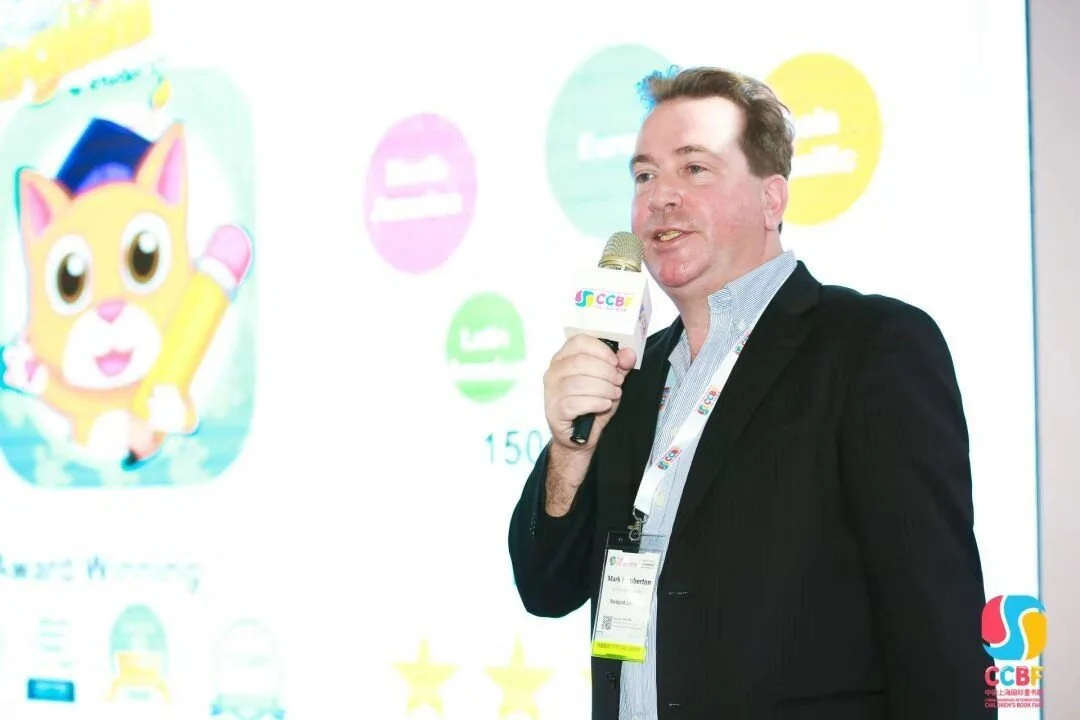
We speak with Studycat CEO Mark Pemberton about language learning outside of the classroom. As the coronavirus causes schools around China to temporarily close, we consider the possibilities and limits of using apps and technology for language learning.

The second of our two-part special on technology in the classroom, with Ray Davila, where we discuss the drawbacks of the increasing involvement of technology in education. We talk about what gets neglected instead of technology (where did the budget for those interactive whiteboards come from anyway?!), the effects on how teachers are assessed and evaluated and if technology might eliminate the need to learn a language altogether in the near future…

We invite back our friend, teacher trainer and materials developer, Ray Davila, to talk about technology in the classroom – is it a fad or is it our future? In the first of two parts, we discuss all that is good about technology, before being as cynical as possible in part two.

Inside Online Language Teaching
If you want to rethink, improve or learn more about teaching online, this book is for you.
Inside Online Language Teaching is a series of discussions and interviews with lecturers, teachers, trainers, and school leaders. These conversations focus on the opportunities in online teaching, not the drawbacks. Read about how to train students to use breakout rooms. Find out how to use your students’ homes as a teaching tool. Learn how to take your students on a virtual school trip. And consider how technology can benefit teacher development. Inside you'll find advice on:
· Keeping primary and pre-primary aged children engaged online
· Encouraging adults and teenagers to develop autonomy
· Conducting one-to-one lessons
· Online teacher training and teacher development

I used to be a civil engineer. On construction sites, there were two ways people stayed safe. There were safety regulations to prevent accidents. But no matter how many safety regulations there were, everyone wore a hardhat. If something went wrong, a hardhat improves your chances of survival. Managing behavior of pre-primary school age children is similar. Teachers can prevent behavior problems from happening by planning engaging classes where children are engaged and feel valued. But when behavior problems happen, we also need tactics to deal with them. Here are two sets of strategies for encouraging positive behavior and dealing with negative behavior when it occurs.

It can be very difficult to get and keep the attention of very young learners. I was once teaching a class about toys when a boat sailed past the classroom window. How can you compete with that?! Whatever you do to get the attention of your very young learners it has to be more interesting and fun than just shouting “sit down” or “look at me”. Below are my four favorite refocusing strategies. Each of these packages “sit down and look at me” in something more fun than whatever is distracting your class. Start whenever you feel your students’ attention is beginning to wander. Everyone will join when they see the fun.

How long can you pay attention for? Will you make it to the end of this blog post before you get distracted? You’re an adult, so it should be easy. But what if you were four years old? How long could you focus for? Young children have short attention spans. If you’re teaching very young learners (three, for and five-year olds) it’s very unlikely then can pay attention for more than five minutes. So what can you do to keep them engaged for an hour long class?

A lot of what occurs in our classes is a mystery to us. Several years ago, I did an action research project on group work. Beforehand, I thought I was a great teacher. I was sure my students spoke English all the time in class, even when my back was turned. As part of the project, I recorded two of my students during a running dictation. These two young learners were meant to be using the language they’d learnt in class to describe a picture of a monster posted outside the classroom. After class I listened to the audio. I expected to hear “It has three eyes.” “It has blue teeth.” “It has green hair.” What did I actually hear? Chinese. My students didn’t speak any English at all during the activity. My perceptions of what was happening in my classroom were the opposite of reality. This is apparently true of most teachers. Jack Richards and Charles Lockhart say “Much of what happens in teaching is unknown to the teacher”. So how can we make more of these unknowns known? Here are five ways of uncovering hidden truths in your classroom.

The concept of teaching English in English is so common, we rarely stop to think about how unconventional and challenging it is. No other subject is taught so immersivity. Can you imagine receiving instruction on interpretive dancing through an interpretive dance? Or getting taught to code by reading java? Probably not.
Teaching English in English would be impossible without one key skill - grading language. Here are 5 strategies to help you help your students understand. And to help you remember them, they spell G-R-A-D-E.

Cognitive biases screw up everyone’s thinking. They make us more afraid of flying than driving. They stop the U.S. enacting universal health care. And they convinced Tony Blair and George W. Bush that the Iraq War was a great idea, even when we knew it wasn’t. In short, cognitive biases make us less logical, less rational and less efficient decision makers. All of this applies to teachers too. Here are five cognitive biases that screw up your thinking in the classroom and why they stop you from being a better teacher.

Your PowerPoint slides are a masterpiece, your materials are back from the printer’s and the opening speech you drafted would put Martin Luther King to shame. But wait a minute, is that good training?I don’t think it is. ‘Less is more’ in art, design and architecture, and I think that less can also be more in training. Here are five principles that will set you on your way to becoming a minimalist trainer.

We’ve all been in there before. Pieces of wood strewn across the floor. Packets of seemingly identical (but vitally different) nails encircle you. At the center of this carnage you sit with furniture assembly instructions on your lap which require the Rosetta Stone to decipher.
Is this also how our students feel in your class? Listening to instructions in a foreign language can be every bit as confusing as assembling those bookshelves. Next time you give instructions for an activity, G-I-V-E instructions.

Picture a class of six-year old’s learning English. What do you see? Dancing? Coloring in? Flashcard games? Face-to-face lessons are naturally kinesthetic, meaning more blood flow to students’ brains, more engagement, and more variety. Online ESL classes can be the opposite: fidgety students struggling to overcome the compulsion to move. As online English teachers, we need more movement in our online classes. Where to start? The 5 ‘i's.

“Please email us your training."
"What do you mean? How can I email you interactions, epiphanies, questions, reactions, reflections and learning?”
"Just send your PowerPoint deck".
When did people start to think that “PowerPoint” is a synonym for “training”? Do they think the “T” in “PPT” stands for “training”? Training is so much more than a series of slides, handouts and bullet points. If your new year’s resolutions included cutting down on fats, sugars or caffeine, here are five reasons to add PowerPoint to your list of things to avoid in the new year.

When I was a first-year teacher, my lesson plans looked like this.
"Warmer (game)
Grammar
Game
Book p14-15
Game
Review"
Games were great at entertaining my classes. Much later I realized that some games were also great for learning English. The challenge was figuring out which games.
If you want your games to be more than a break between grammar drills and book work, check your games against “GAMES” (Group, Appropriate, Motivating, English, Skills).

Maybe you hate your school. Maybe you’re working undercover for a competitor. Maybe this is your next gig after hacking the American election. Whatever the reason, you’re in good company; there are a lot of people dedicated to destroying teacher development. Little has been written about the field of destroying teacher development (or “DTD” for short), so to make your work easier, I have compiled this list of the highly effective DTD techniques. Go forth and destroy!

To paraphrase Abraham Lincoln (via Penny Ur),
You can teach some of the students all of the time, or all of the students some of the time. But you can’t teach all of the students all of the time.
Why not? Because most classes are mixed level. Some students learn faster than others, some write better than others, some are quieter than others. So the question we need to ask ourselves is…
How can we teach more of our students more of the time?
We can teach more of our students more of the time by making our mixed level classes “MIXED” (by using Materials, Instructions, eXpectations, Evaluation, Discipline).

Moses Chilufiya once said, “A school without teachers is like a ship without a sail.” Great teachers can set schools and students on a course for success, but finding great teachers is easier said than done. Do your new recruits have more in common with Alfie Vickers than Socrates? Here are three simple mistakes to avoid in teacher recruitment.

There are so many things to think about when you’re being observed, it’s easy to forget the obvious. Here are seven ways to make sure you rock your next observed lesson.

Hold it! Step away from the photocopier. Do you really need those extra materials for your next class? Are those handouts going to help your students learn or just clear a couple of inches of Brazilian rain forest? Before printing anything more, check your materials (or ‘mateRRRRials’) against the four ‘R’s (real life, relevance, reaction and recyclability) and make sure you and your students get the most out of them.

Can you remember some of the things you were “forced” to do when you were a child? Forced to wear a school uniform. Forced to go to the dentist. Forced to eat vegetables. Being forced to do things sucks. And yet every week we force teachers to attend training in the hope teachers can be forced to develop. They can't.

What do you think of when you hear the name Barak Obama? Some think race. Some think drone war. Some think health care. I like to think education. Here are my three favorite Obama quotes and what they mean for teachers.

When you see a police car in the rear-view mirror, do you drive more cautiously? Do you work later when your boss is staying after hours? Researchers call this behavior “the Hawthorne Effect.” And, it affects your ESL classroom more than you think.

In 1998 the United Nations decided that it was going to eradicate drugs from planet earth by 2008. This project was doomed to failure from the start. Human beings have been getting high since prehistoric times. How could the UN ever obliterate in 10 years something which has been in used for 10,000 years? Instead of removing narcotics from society, the war on drugs created public health crises, mass incarceration and violence. Counties are now trailing alternative approaches - Portugal decriminalized all drugs in 2001 and drug use hasn’t increased there since. In many TEFL classrooms a similarly futile war is being waged. I call it the “war on L1” (L1 = students’ first language).

Yesterday, I was Cc’d in an email. My coworker, Annie, (who handles all the online payments in our department) emailed our mutual boss, Gary. The email read,
“Hi Gary, Ross is asking me to pay the website fee for 149.95USD, but the bank is asking for a verification code to complete the payment. What should I do? Thanks, Annie”
I read this and thought, ‘what a bitch....

100 couples get divorced in America every hour. These divorces cost 11 billion dollars a year in legal fees and result in 43% of kids in the States being raised without their dads. Tragic. But what’s causing all these divorces? Getting married too quickly? Staying out too late? Not enough sex?

How many of us start lessons by asking students to put their mobile phones away? Probably too many. The vast majority of our students come to class with a computer more powerful than all of NASA had in 1969. NASA used their technology to put men on the moon with a rocket. Our students use their technology to fight zombies with plants. Doesn’t that sound like a waste?

Listen. You can’t hear learning taking place, can you? You can’t hear the cogs in students’ brains turning as they try to get their heads round a new language concept, can you? You can’t hear the humming of a learner’s’ brain as they internalize a new word, can you? Well, I think you can. The best classes I’ve ever observed and taught all had this sound in abundance. You’ve heard this sound before. You know what it sounds like. What’s the sound?

At some point in the past, we decided on a “native speaker” model of English. We recruited millions of “native speakers” as teachers. We recorded and played thousands of “listening's” featuring other “native speakers”. And we forgot about all the other English accents in the world. Now, we have millions of students who can understand American English and British English. But what about the other Englishes?

If you have, you’ll know one of the reasons that Fight Club is great is because of the ending. Ed Norton and Helena Bonham Carter look out over a sea of destruction while Black Francis croons and creams an apocalyptic tribute to mental illness. Brilliant. But what does this have to do with teaching English?

A few days ago I observed a class. The students were engaged, spoke lots of English, stayed on task and laughed when the teacher made jokes. There was just one thing missing. The thing that learners desire above all else. Feedback.
As soon as the lesson finished, I thanked the teacher for letting me observe and asked her if she’d like to chat about the class. “Absolutely,” she said, “I’d love to get some feedback.”
If you regularly listen to this podcast, the chances are you listen because you want to be a better teacher. But what is the best way to become a better teacher? Is it attending training? Is it being observed by your boss? Is it watching your peers teach? In a special end of year double length episode, Professor Thomas Guskey, author of Evaluating Professional Development talks to us about the best way to help teachers learn and the evidence for workshops, peer observations and what the best teachers do that the rest of us don’t.

We speak with friends and experts about teacher training and what needs to change. Our guests are David Nunan, Kathleen Bailey, Thomas Guskey, Steve Walsh, Mark Hancock, Marek Kiczkowiak, and Chris Rolland.
Professor Kathi Bailey joins us to discuss teacher evaluation. Teacher evaluation can do so much good, but it can also end up doing even more harm. Professor Bailey tells us about what supervisors can do to earn trust, why supervision and evaluation is important, and how everyone can make the most out of the process.

We talk to friends and experts and ask two questions about changes they’d like to see in classrooms: what common teaching practices would you like to see less? And, which less common teaching practices would you like to see more? Guests include Penny Ur, Karin Xie, Ian McGrath, Kathleen Baily, Donald Freeman, Rod Bolitho, Anne Burns and Tessa Woodward.

No man is an island, and no teacher is either. We’ve all been influenced by someone in our own teaching, be it colleagues, trainers, authors or our own teachers. But who influenced them? In our longest ever episode, we ask English language teaching legends Diedrick Van Gorp, Debbie Hepplewhite, Stephen Krashen, Vivian Cook, David Crystal, Jack Richards, Hugh Dellar, Alan Maley, Penny Ur and David Weller about their influences and what they learned from them.

Student behavior and trying to control student behavior is huge worry for many teachers of young learners and teenagers, yet it’s also one of the least talked about. In this special length end of year episode, we talk with Chris Roland, author of Understanding Teenagers in the ELT Classroom about why students don’t always behave as teachers would like them to, why behavior gets discussed so little on teacher training courses and what teachers can do to better manage their students’ behavior.

We break our record for the most guests on one show ever! Hear experts from the TEFL industry with over 200 years of collective experience share their favorite language learning activities. We speak with Edmund Dudley, John Hughes, Matt Courtois, Brian Tomlinson, Ben Beaumont, Dave Weller, Wendy Arnold, Debbie Hepplewhite, Ray Davila and Diederik Van Gorp and ask them all the same question: “What’s your favorite language teaching activity?”

Since it’s Christmas, we bring you a double length episode with Professor Jack Richards. We discuss a range of issues related to English and coursebooks: how has curriculum design changed? What influence has the CEFR had on coursebooks? How does English as a Lingua Franca affect what we should teach? What effect does all the English available outside the classroom on the internet have on students and teachers inside the classroom?

I talk to regular guests Diedrick Van Gorp and Allan Crocker about the Zombies of language teaching: what are the ‘bad’ activities, ideas and practices in TEFL that just won’t die?

We meet with friends, family and special guests to hear about how language learning experiences affect and inform our views of language learning. In our longest podcast ever, we hear from Patsy Lightbown, Professor at Concordia University Canada about language learning experiences in Africa and North America; from teaching guru Ben Beaumont, from Trinity College London about the trauma of learning French at high school; from Janice Thorburn, former German and French teacher about learning German through grammar-translation and what that meant for her teaching later in her career; from our regular podcast guest Matt Courtois, about language immersion in Nepal, Russia, China and Bolivia led to very different outcomes; and from author and teacher trainer Wendy Arnold about how in spite of being a native English speaker in Peru, she failed her English exams at school.

We celebrate our 100th episode by interviewing linguist, writer, editor, lecturer and broadcaster Professor David Crystal about the history of English. David takes us all the way back to the first surviving example of written English, to the birth of American English to the spread of text messaging to the present day with the internet and corpus linguistics.

For our first ever 30 minute Christmas special, we welcome back Marek Kiczkowiak to talk with us about native-speakerism. Marek talks with us about the discrimination non-native English teachers face in finding jobs, being promoted and being respected in general.

For our 75th episode, we discuss a question which is both very simple and highly complex: What’s the best way to learn a language? We challenged each other to fit everything we could about language learning onto a single page of A4 paper, then compare our notes in a marathon 60-minute discussion. For maximum effect, prepare your own notes on “What’s the Best Way to Learn a Language” before you listen.

We celebrate our third anniversary podcast by inviting six of our favorite guests to tell us what they’ve changed their minds about in language teaching over the course of their careers. Over the course of 35 minutes in our longest episode ever, Carol Lethaby, Dave Weller, Karin Xie, Matt Courtois, Paul Nation and Simon Galloway discuss grammar teaching, teaching roles, the Dunning–Kruger effect, communicative language teaching and more.

In a special long form episode, we talk about our highlights from IATEFL 2019 in Liverpool with our favorite guests, Dave Weller, Matt Courtois and Simon Galloway. We discuss talks by Adrian Underhill, Alan Maley, Brian Tomlinson, Rob Bolitho, John Gray, Scott Thornbury, Silvana Richardson and many more.

My friend Niamh Ryan, joins me to talk about evaluating teacher training. How can you tell if your training is making a difference?

Thom Kiddle joins me to talk about online teacher training courses. What makes them effective? What best practices are there for trainers? And what kinds of questions can teachers ask to help trainees reflect?
I speak with Amol Padwad from Ambedkar University Delhi about teacher motivation and teacher development. What incentives make sense for teachers at different stages of their career? What demotivates teachers from wanting to develop? And how can schools encourage all their teachers to develop without forcing them?

Simon Galloway (author of Teaching Teachers Online) joins me to discuss using forums in online teacher training. We talk about how to encourage interaction between trainees, how to encourage trainees to post critical and reflective comments, and how to incorporate variety into forum tasks.

Simon Galloway (author of Teaching Teachers Online) joins me to discuss how to run webinars. We discuss how to make the most of breakout rooms, polls and chatboxes, why webinars should be part of distance learning courses and when to avoid using webinars.

Teacher trainer Diederik Van Gorp joins me to discuss the ingredients for a successful teacher training workshop. How much theory should trainers include? How can we make learning transfer more likely to happen? And what training activities work best in face-to-face training?

Dave Weller and I discuss the most useful questions teachers should ask themselves to reflect, what needs to be in place before teachers can reflect and what stimuli can help to prompt reflection.
We break our record for the most guests on one show ever! Hear experts from the TEFL industry with over 200 years of collective experience share their favorite language learning activities. We speak with Edmund Dudley, John Hughes, Matt Courtois, Brian Tomlinson, Ben Beaumont, Dave Weller, Wendy Arnold, Debbie Hepplewhite, Ray Davila and Diederik Van Gorp and ask them all the same question: “What’s your favorite language teaching activity?”

What shapes the ways we teach? What influences teachers' views and beliefs about language learning?
Trinity College London teacher trainer Karin Xie and I discuss what factors we see influencing teachers' ideas about teaching and talk about how our own experiences have informed our views of language teaching and learning.

As teachers, we try to personalize our classes for our students. But as supervisors, trainers and mentors, how much do we personalize our feedback to teachers?

Donald Freeman, professor at the University of Michigan, joins me to talk about the how teachers become teachers. Do teachers teach as they were taught? What role does our experience as students play in forming our attitudes about teaching? And how does our experience as language learners and users influence our behavior in the classroom?

As a teacher trainer, one of the most uncomfortable experiences in telling trainees they failed something; a class, an assignment or possibly even a whole course. We speak Trinity College London CertTESOL and DipTESOL course director with Felicity Pyatt about what to do when that happens. How to decide to ‘fail’ a trainee, how to break the news and how to help trainees bounce back.
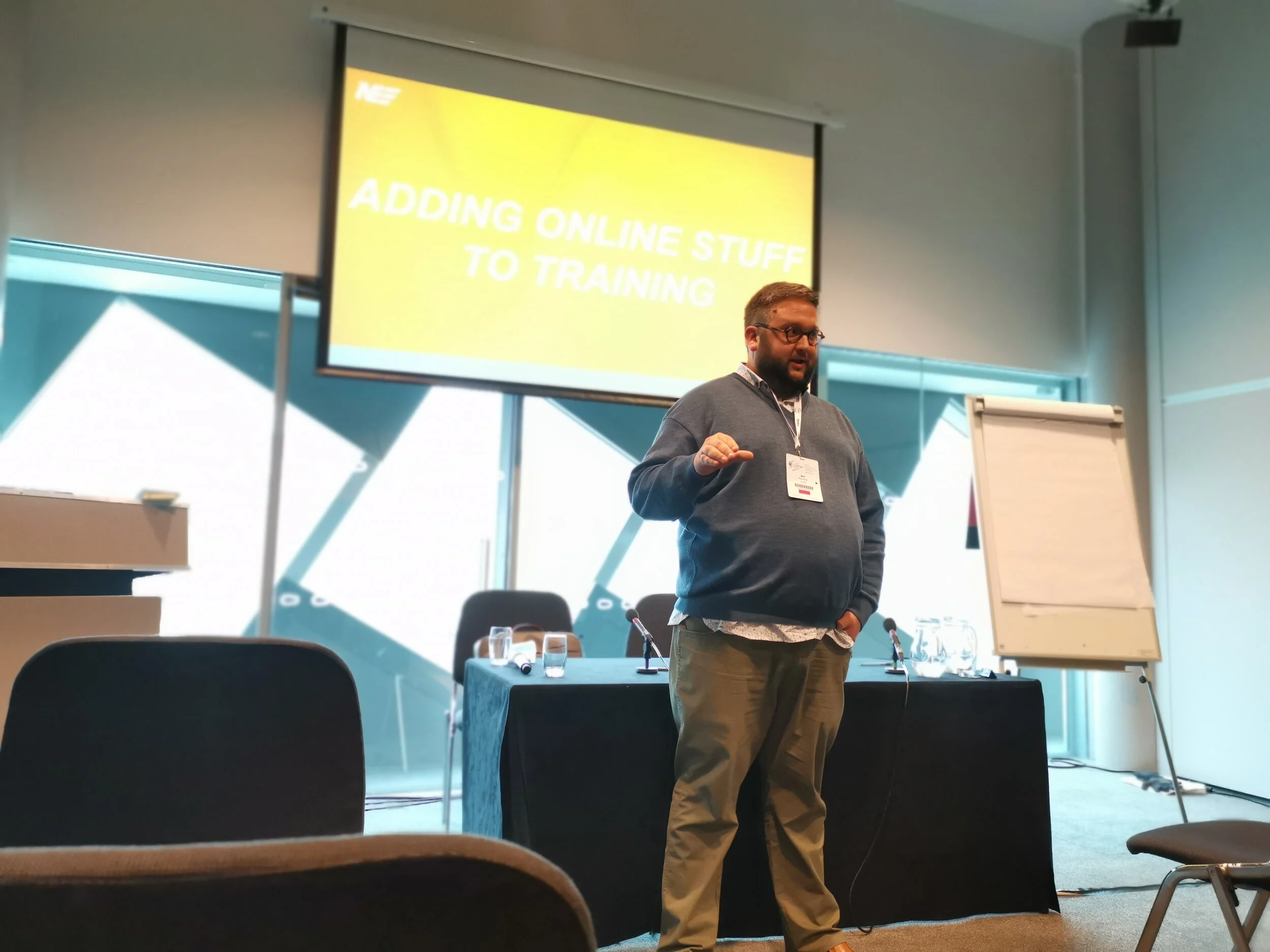
Former online teacher training manager Matt Courtois and I meet to talk about online teacher development and evaluation. What opportunities does online teaching create for teacher development?

We speak with two of our favorite podcast guests, Dave Weller and Simon Galloway about the growth of online education the importance of cooperation in learning and the challenges in cooperative learning online for students, teachers, trainees and trainers.

We speak with Ben Beaumont about teacher qualifications and reflection, reflective in action, reflection on action and how trainers can encourage these skills in their trainees.

In our second of two podcasts recorded at IATEFL Liverpool (this one recorded at the end of day one), we speak with our favorite podcast guests Matt Courtois, Simon Galloway & Dave Weller about how teachers and trainers can challenge themselves and discuss sessions by Paula Rebolledo, Adrian Underhill and Julie Choi & David Nunan.

All language lessons need a context. Language must be learned and practiced in context. Without context, students cannot remember or use new vocabulary. You've probably heard these arguments before (possibly on this podcast), but are they true? We discuss the pros and cons of context with our friend and teacher trainer (and former many other things!) Diederik Van Gorp.

Everyone learns from their experiences in the classroom, and if you’re listening to this, you’ve probably learned from theory too. What are the differences and similarities between the two? Ross and Dave Weller discuss the differences between theory and practice in teacher development and the most effective was to learn from theory and learn from practice.

We often assume that observations are more about being assessed and judged than about learning. But observations don't necessarily need to be trainer centered. This episode we look at how we can observe through three types of observations - being observed, observing others and observing ourselves.

We look at minimalist approaches to teaching, training and management and discuss examples of when less busy means more efficiency.

Being observed can be one of the most nerve wracking experiences that we go through as ESL teachers. We speak with TEFL teacher trainer, manager and serial observer Matt Courtois about what you (as a teacher) can do to survive (and possibly even learn from) your next observation.

More than a quarter of adults in the US now listen to podcasts. But how can podcasts help teachers and students?We interview Matthew Turner and Rob Lowe from the TEFLology Podcast about how podcast can positively influence teacher development and be help students inside and outside the classroom.

For our first anniversary episode, we talk with Ross' parents about the differences that teaching has seen over the last 40 years, how to motivate yourself throughout your teaching career and what advice they have for young teachers working with older teachers.

Becoming a teacher trainer is super popular career goal for new teachers, but it can also seem pretty daunting. How can you move from teaching into training?We speak with three teacher trainers (Simon Galloway, Ray Davila and Dave Weller) about their careers; where they started, where they are now and how they got there.

Plan-teach-reflect, plan-teach-reflect - the reflective cycle is drummed into new teachers, but what does reflection actually mean? We look at why reflection is important, the barriers that stop teachers from reflecting and how to overcome some of these.

Teaching and training are similar, but different. We explore the challenges new trainers face after leaving teaching for training.

"Training" and "Professional Development" might sound the same, but attending training doesn't guarantee development. Listen to find out why.

Becoming a new EFL teacher is almost as hard as learning a new language. We look at typical challenges that new teachers face, consider strategies that teachers and mentors can use to overcome these and help you decide if TEFL is right profession for you.

Listen to find out what common misconceptions teachers have (like 'learning styles', 'multiple intelligences', etc.), why theories don't get applied in the classroom and how teachers can bridge the gap between theory and practice (with special guest, Dave Weller).

Do coursebooks de-skill teachers? What happens if the important decisions about planning get left to coursebook writers rather than teachers? How much of the coursebook should schools tell teachers to use? And what can you do if your school doesn’t let you deviate from the prescribed materials? Dave Weller, author of “Lesson Planning for Language Teachers” and friend of the podcast discuss.
Many teachers dread being observed by their supervisors. On this week's podcast, Mario Rinvolucri tells us about an alternative: supervision without observation.

This week we look at coaching. Coaching is a common management and educational tool, but what exactly is coaching? Niamh Ryan joins me to talk about what coaches do and don’t do, the benefits of coaching, what questions can you ask during a coaching session, and in what situations should we avoid coaching?

Author Russ Mayne joins me to discuss evidence based teaching. How can teachers find research to help them teach more effectively?

George Pickering joins me to talk about managers. What do they do? How do they do it? What are the most important skills? And how easy is it for teachers to become managers?

Tessa Woodward joins us to talk about her work with the Fair List, UK. We talk about discrimination towards women (as well as other groups), why it is important to have different groups represented by speakers at conferences and what listeners can do to find out more.

Amol Padwad joins us to explain “decentering” in ELT. Amol tells us about the problem with language teaching having a “center” and how this can cause voices and ideas to be suppressed.

Have you ever thought about starting your own school, start-up or just going freelance? As the educational landscape changes due to Covid, branching out on your own is becoming a necessity for many teachers. This week I speak with three people who have gone from being teachers to becoming their own bosses. Peter Liu tells us how he got the inspiration for his online education company, Jake Whiddon tells us why he founded his own school after fifteen years of working for other people and Ed Dudley tells us what kind of people should avoid going freelance.

Ceri Jones from ELT Footprint joins me to talk about green issues in language teaching. What does the environment have to do with teaching English? Is climate change too much of a hot topic for the language classroom? What can teachers do to weave the environment into their lessons?

Ross speaks with Ekitzel Wood about online marketing ethics and discrimination in teacher recruitment. We know data from Facebook was used in the last US Presidential Election, but how does your Facebook information change the job advertisements that you see? Online marketing affects the jobs we have access to, who are colleagues are and the expectations our students have. Hear the power schools now have to discriminate by gender, age and race, and how this affects you.

Coursebook writer Wendy Arnold talks to us about coursebooks – do they ever really work? Schools and ministries of education buy new coursebooks, but how much do these change the way students learn and teachers teach?

Ross and Dave Weller talk about ethics in English education. What problems are caused by charging for teaching? What are the ethics of observing teachers? Is it fair to expect teachers to prepare for classes in their own time?

The end of the year means performance review time. How often do you go into a performance reviewing thinking “I’m really excited about this”? If you’re anything like us, probably never. We talk about why performance reviews get a bad reputation, why they’re not all bad and what teachers and managers can do to get the most out of them.

You've probably heard (possibly on this podcast) about the discrimination "non-native English teachers" can face finding jobs, in being promoted or receiving equal pay. But how does Native-speakerism affect what happens inside the classroom? How do attitudes about native speakers affect the content in our course books, the confidence of teachers and the goals of our students? We speak with Marek Kiczkowiak to find out.

In the the words of McKinsey, "we're all marketers now". But what can teachers and schools do to better promote themselves? We interview three ESL marketing experts (David Weller, Jonny Arthur and Peter Liu) about how (if you're a teacher) you can promote yourself and (if you're a manager) how you can promote your school.

"By lying, we deny others a view of the world as it is. Our dishonesty not only influences the choices they make, it often determines the choices they can make—and in ways we cannot always predict. Every lie is a direct assault upon the autonomy of those we lie to" (Sam Harris). So what of lying in language teaching? How honest are we with our students? How honest are schools with their teachers? And how can we be more honest with ourselves? We discuss with ESL recruitment guru, Jessica Keller.

Do teachers of different races get treated differently? Do schools prefer white teachers? Do students care what color their teacher's skin is? We interview Asia Martin about her experiences as a black teacher in China and discuss Ross' research into racism in TEFL recruitment.

Cognitive biases screw up our thinking. They make us make bad decisions, come to wrong wrong conclusions and for the most part we're completely unaware of them. This week we speak with Trinity DipTESOL course Director Simon Galloway about cognitive biases for teachers, cognitive biases for trainers and cognitive biases for managers and how to avoid them and start thinking more clearly.

What are the real differences between "native" and "non-native" English teachers? How did we end up with these distinctions in our industry? And what should we be doing about discrimination? We meet with Dave Weller to discuss the issues surrounding "native" and "non-native" English teachers such as attitudes of parents and teachers, the responsibilities of language schools and how to change opinions.

In mainstream education, half of all teachers leave the teaching profession within five years of joining. If teachers are the most important factor in helping students learn it’s essential we figure out what managers, schools and teachers themselves can do to solve this problem.


This study investigated how effective four tasks were in supporting meaningful spoken language production between young learners and their teachers. The context of the study, online one-to-one lessons, is commonplace but largely unresearched. Transcripts from seventeen teacher-student dyads using four tasks were analysed using conversation analysis. These were then coded and the number of instances of meaningful communication counted. The number of instances of pushed output and negotiation of meaning were also noted. The most successful task was an open opinion-gap task, which motivated the young learners. Crucially, the task outcome (a plan of a shopping centre) allowed learners to check their teachers had understood them. Teacher misunderstandings gave learners opportunities to take control of the discourse and negotiate meaning. Aspects of task design which impeded meaningful communication included sentence stems, which resulted in drill-like interactions. Task topics familiar to learners but unfamiliar to teachers hindered meaningful communication. Also, tasks located near the end of a lesson sequence tended to result in less meaningful communication than those nearer the start.

This interview originally appeared in the EL Gazette in September 2020 and covers challenges in teaching children online as well as tips for encouraging meaningful communication and overcoming tech problems in class.

As teachers around the world get used to teaching online, it’s easy to focus on the drawbacks; the things that we used to be able to do offline but can no longer do online. Far less attention gets paid to what we can do online that was never previously possible offline. In my experience as a trainer in an online language school, this context holds just as many opportunities as it does limitations. In this short article, I will discuss six opportunities inherent in online young learner classes that were never previously possible in face-to-face lessons and how to take advantage of these.

The proliferation of online teaching in the wake of the coronavirus has profound consequences for teacher development and teacher evaluation. If we are to improve online teaching it is vital that we take advantage of the opportunities this new medium affords us, while being alert to the potential ethical dangers.

We know that our industry discriminates against “non-native English teachers”, but what about plain and simple racism? Read to discover to what extent to which schools in different parts of the world make recruitment choices based on race and discuss what can be done about this common, yet little-discussed issue.

Discrimination against non-native English-speaking teachers (non-NESTs) is commonplace: non-NESTs tend to get paid lower salaries, are given fewer promotion opportunities and get passed over for jobs. But what is the rationale behind these discriminatory hiring practices?
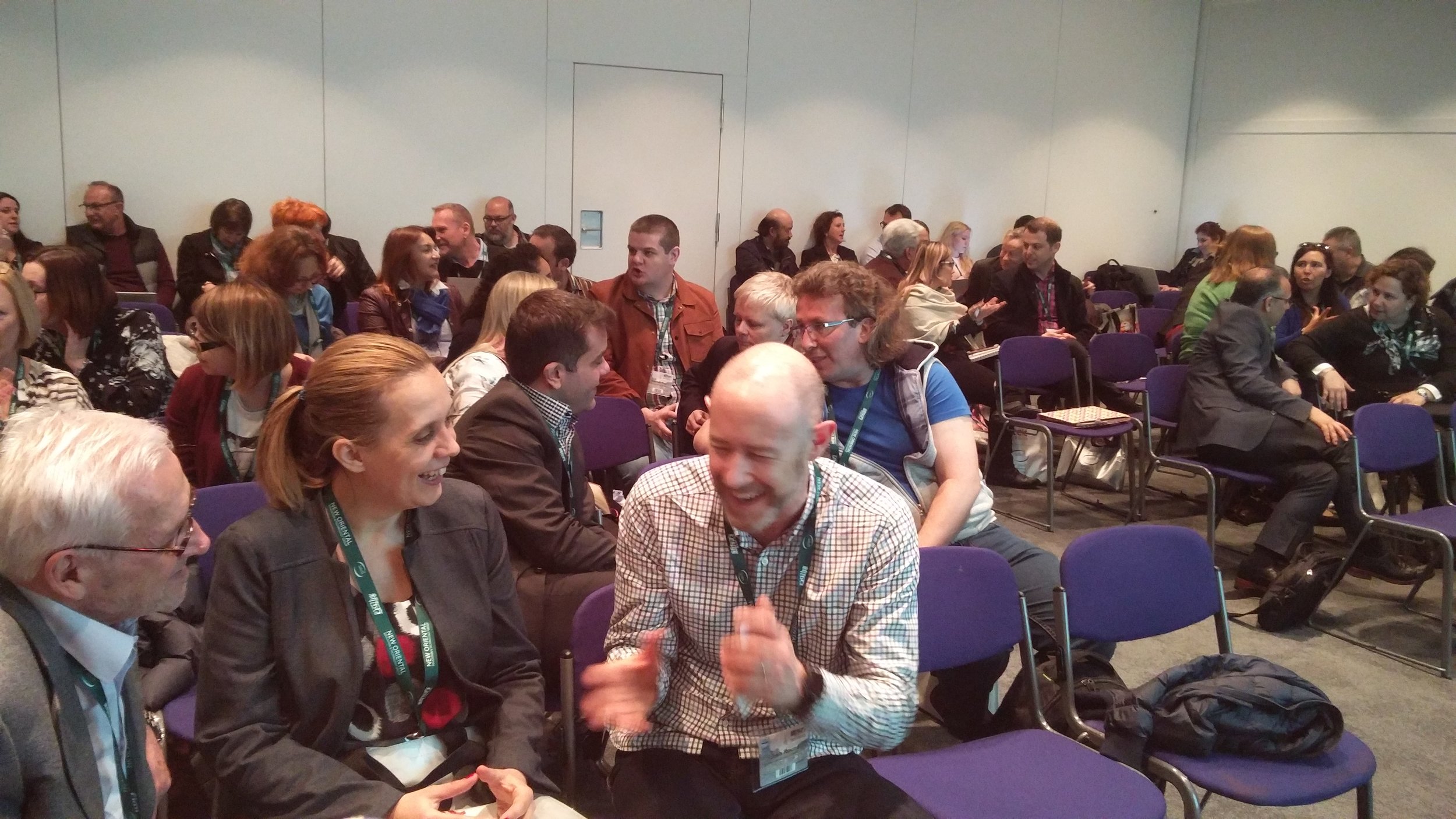
Ask more or less anyone what motivates people and you will hear more or less the same answer: money. Without exception, every time I have a run a workshop about how to motivate teachers, the participants pick “salary” as the most important factor. The participants at this workshop at IATEFL 2017 were no different. Their answers to “What do you think motivates teachers?” collected at the beginning of the workshop, are shown in Figure 1. There is research to support this belief. In 2006, Andy Hockley surveyed 105 teachers about their motivations at work and found salary was one of the most commonly identified factors for teacher motivation (Hockley, 2006). But is that still true now?

Sixty years since Rosa Parks refused to give up her seat. Fifty-five years since Martin Luther King’s “I have a dream”. And, four decades after George Wallace said “I was wrong.” You might think, by now, we’d have racism under control. We don’t. In fact, the prevalence of racism in recruitment has not improved in the US since 1989 (Quilliana, Pagerc, Hexela & Midtbøenf, 2017). Is TEFL recruitment racist? We know that our industry discriminates against “non-native English teachers”, but what about good old, garden-variety racism?

This article will investigate the attitudes of service and sales staff, parents, students and teachers towards native-speakerism in the Teaching English as a Foreign Language (TEFL) industry in China. It will briefly review literature on the subject, consider survey responses from 1123 respondents at a language teaching organization (LTO) in China and attempt to explain the results and consider the implications. I will argue that if we (as an industry) hope to change parents’ and students’ preferences for “native English teachers” we must first change the views of our own staff. Additionally, as they have a key role in setting customers’ expectations about language learning, sales and service staff are of paramount importance in any attempts to change consumer preferences. Yet, until now, these groups have not been part of our professional discourse on this matter nor have many attempts been made to better understand their beliefs.

This article will investigate teacher recruitment in the Teaching English as a Foreign Language (TEFL) industry in China. It will review literature on the subject, consider survey responses from 1220 teachers who either accepted or rejected offers of a job at a language teaching organization (LTO) in China and will attempt to explain the results and consider the implications for language teaching institutions.

MAILING LIST
Join our mailing list to keep up to date with new content.

Diploma in TESOL
Resources to help you on the Diploma in TESOL
Teacher trainer and author Tessa Woodward joins me to talk about experiential learning in teacher training. What is experiential learning? Where does it come from? What is loop input and how can this help teachers? How can teachers make sense of what happens to them in training?